Operations

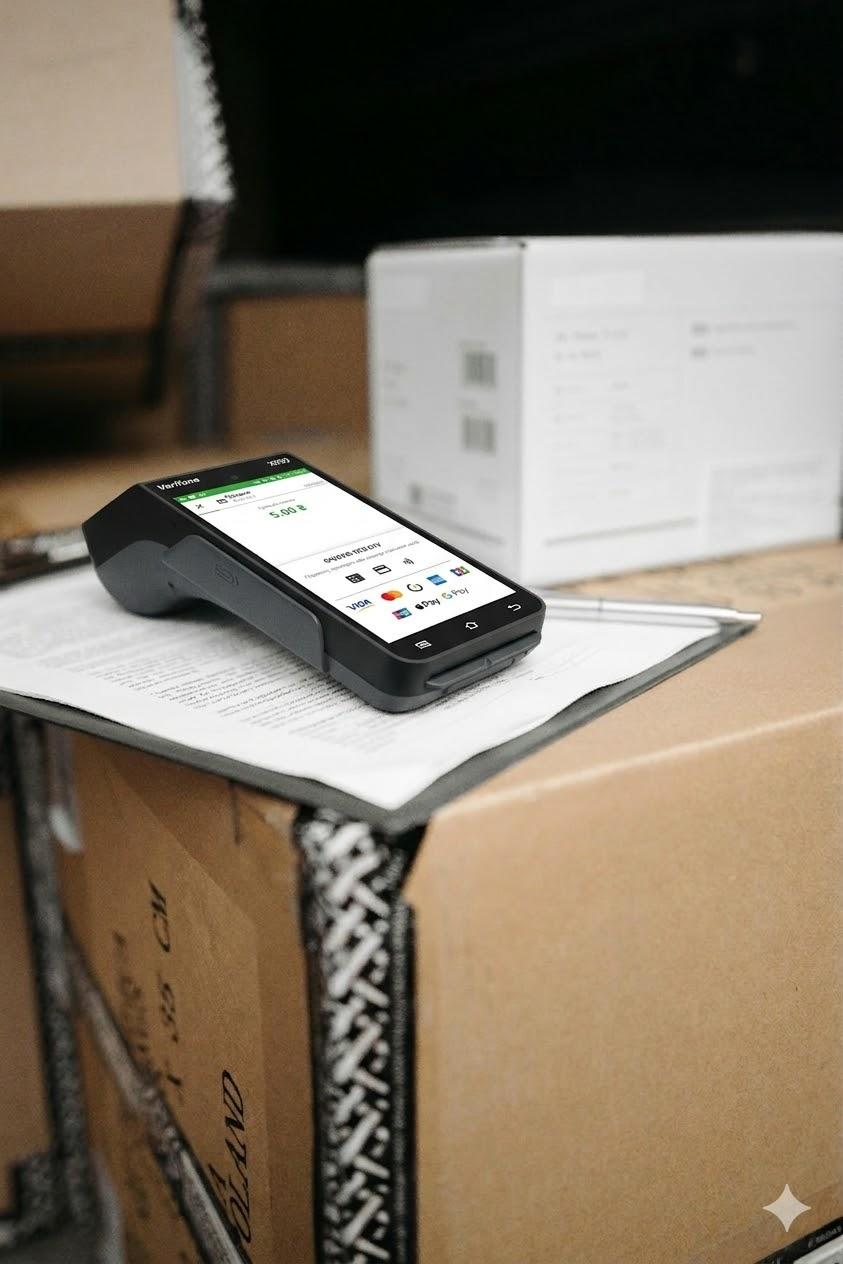
Device Lifecycle Management (DLM) is the practice of overseeing a fleet of connected hardware from the moment it is requested to the moment it is retired — and every operational step in between. For a payment acquirer it is a population of POS terminals; for a telco it is customer-premises equipment; for a hospital it is medical devices. The vocabulary changes, the discipline does not.
Most teams discover DLM the hard way: a device estate grows faster than the spreadsheets, email threads, and chat groups used to run it. What follows is a guide to the lifecycle itself, where it tends to break, and what a governed approach looks like.
A device does not simply appear in the field. It moves through a sequence of operational stages, each with an owner, a hand-off, and a record that needs to be kept:
The failure points are almost always at the hand-offs. A request approved in an inbox is invisible the moment it leaves the desk. A device that ships without an approval gate becomes a line item nobody can reconcile. A faulty unit returned from the field with no link to the parts it consumed becomes a cost that never gets billed back.
These are not technology problems first — they are governance problems. The fix is to make each transition explicit, enforced, and recorded, so that status is always truthful rather than reconstructed after the fact.
A governed lifecycle replaces the whiteboard and the chat group with one pipeline. Server-enforced state machines mean steps cannot be skipped. An approval gate means no device leaves stock unapproved. Per-step timestamps and proof of delivery establish a chain of custody. And an audit trail records who changed what, when, and from where.
This is the layer Nexura was built to run. It is deliberately distinct from the remote control plane (a TMS, an MDM, a CPMS) that manages a device once it is already live — Nexura governs everything that has to happen, correctly and provably, to get it there.
As estates grow and regulators ask harder questions, the cost of an ungoverned lifecycle compounds: slower deployments, lost inventory, SLA breaches surfaced only when a customer complains, and audit evidence assembled by hand. A single operational system of record turns each of those from a recurring fire into a managed process.